The Sure Shot Stress Buster: Building Resilience
In our professional or personal lives today, can we wish away the pressure to perform or deliver and the expectations around it? This now is an inevitable truth of our high paced lives, unfortunately sometimes resulting in Stress. Extended Over long period of time, it can severely impact both mental & physical health. At liboo we believe that building Resilience is the one sure shot method to combat Stress. Read this article to explore ways to enhance your Resilience by including small lifestyle changes in your daily routine.
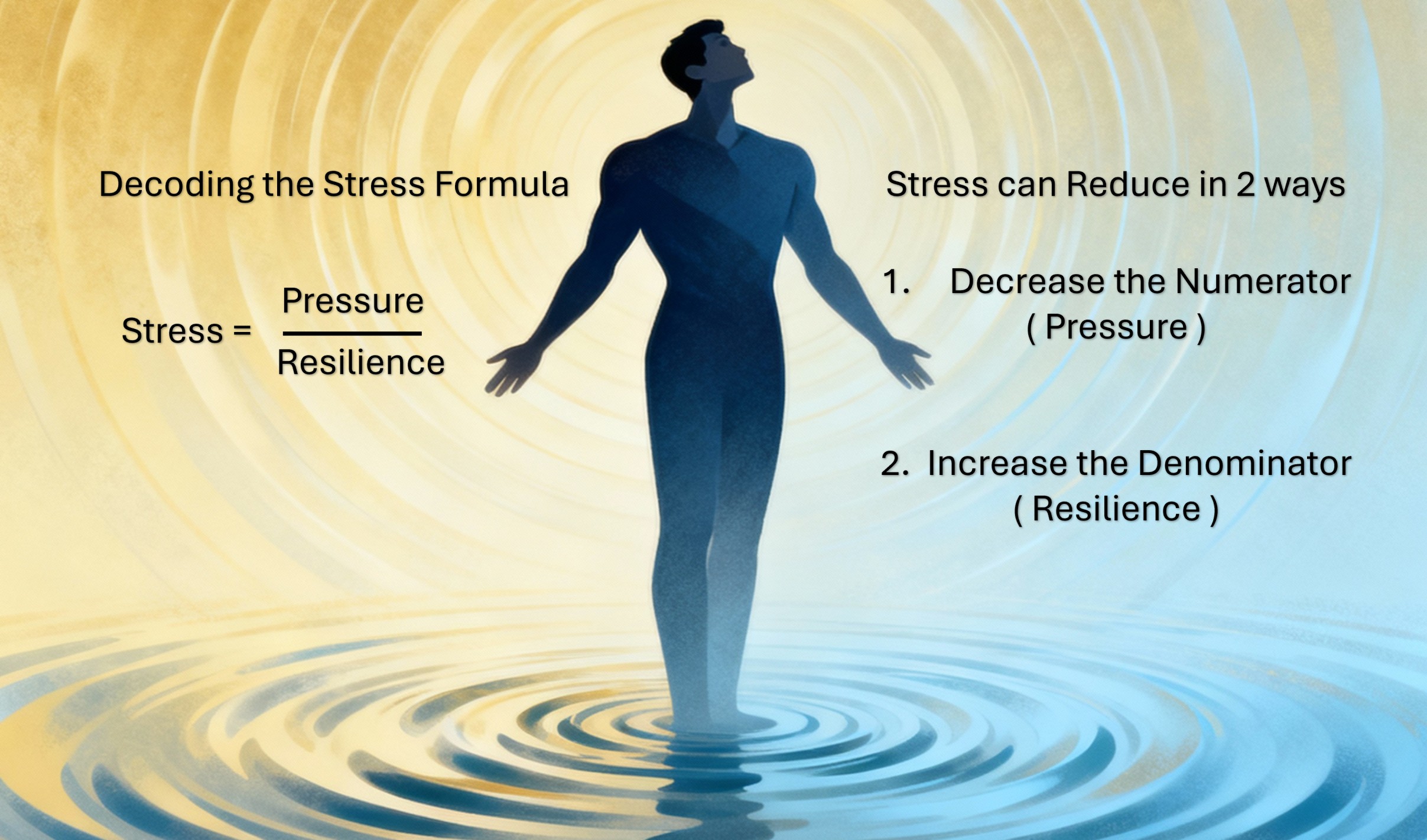
In today's fast-paced professional world and a demanding personal life, stress has become an unwelcome companion. We face mounting pressures from deadlines, targets, and constant demands. But here's a powerful & interesting formula that decodes stress and reveals the key to managing it effectively:
STRESS = PRESSURE / RESILIENCE
This simple equation reveals a profound truth. When we examine this formula, we see that stress is determined by two factors: the pressure we face (numerator) and our resilience (denominator). Can we realistically reduce pressure in today's modern life filled with deadlines and targets? Probably not. The day-to-day pressures will remain largely the same. So what can we do? We can reduce stress by increasing the denominator, our Resilience.
Understanding Resilience: Your Stress Management Superpower
Resilience is the ability to bounce back from difficult experiences and adapt successfully to stressors while maintaining psychological well-being. Here's the good news: resilience isn't completely a trait you're born with; it involves behaviours, thoughts, and actions that anyone can learn and develop. It's a skill, like riding a bike, and the more you practice, the better you become.
Research shows that 30 days of mindfulness meditation resulted in an 11% increase in mental resilience while stress was reduced by a third. This isn't just theory, its neuroscience proving that resilience-building interventions can physically change how our brains respond to stress.
Liboo (the Liberated Owl) recommends Ten Proven Ways to Build Your Resilience
1. Dedicating one hour everyday as your non-negotiable “Me Time”
One hour everyday which is a NO-phone / No digital media hour, just your pure, genuine, authentic self, dedicated to self-love & self-care. Do take out time to read my previous article https://www.linkedin.com/pulse/why-daily-one-hour-me-time-non-negotiable-liboo-zcslc
2. Practising Mindfulness and Meditation
Mindfulness involves intentional awareness of the present moment, helping you build resilience and reduce stress. Studies with law enforcement officers showed that increased mindfulness was directly related to increased resilience and decreased burnout.
3. Trying Cognitive Reframing
Instead of seeing a project setback as a failure, cognitive reframing helps you view it as a learning opportunity. This technique involves identifying negative automatic thoughts, examining the evidence for and against them, and developing more balanced perspectives. Try thought journaling: write down a stressful situation, note your automatic thoughts, question if they're 100% true, then reframe them into something more balanced.
4. Building Strong Social Connections
Social support is one of the most powerful protective factors for resilience. People with robust social networks have better health, longer lives, and report higher well-being. They're more resilient during setbacks and stress. Connect with others through volunteering, joining community groups, or participating in activities you enjoy. The key is nurturing these relationships through regular check-ins and mutual support.
5. Including Regular Physical Exercise in daily routine
Exercise is indispensable for building resilience. When you exercise, blood flow increases throughout your body, pumping more oxygen to the brain and helping it function optimally. Exercise stimulates the hippocampus, the brain region associated with memory, learning, and emotions, increasing production of serotonin (the "happy hormone") and improving focus. Just about any form of exercise boosts endorphins, improves mood, and counteracts the damaging effects of stress.
6. Practicing Gratitude Daily
Gratitude journaling rewires your brain to scan the world for positives. After just 21 days of practicing gratitude, people experience improved mood and reduced stress and anxiety. Write down three to five things you're grateful for each day, be specific, go for depth over breadth, and focus on people rather than just things. Studies show this simple practice leads to better sleep, more optimism, and increased positive moods.
7. Prioritizing Quality Sleep (No phone 2 hours before sleep)
Good-quality sleep is a critical player in resilience. A meta-analysis of 68 studies involving 131,820 individuals found that good sleep results in higher reported resilience. Quality sleep leads to better hormone regulation, especially of cortisol, if high is well-known as a stress hormone. Create a consistent sleep schedule, include physical activity in your daily routine, and establish bedtime rituals to optimize your sleep quality.
8. Discovering Your Purpose
Having a sense of purpose, a central, organizing life aim, enhances emotional resilience and promotes better health outcomes. Research shows that people with greater purpose in life experience significantly lower levels of stress, depression, and anxiety. As Viktor Frankl observed from his concentration camp experience: once a person "knows the 'why' for his existence, he will be able to bear almost any 'how'". Explore what matters to you, volunteer in areas that interest you, and remember that purpose evolves through different life stages.
9. Embracing Self-Compassion
Self-compassion means treating yourself with kindness and understanding in the face of failures or inadequacies. It activates our caregiving system, releasing oxytocin that creates feelings of safety, the ideal state for resilience building. Try the Self-Compassion Pause: when you're being hard on yourself, place a hand on your heart, take a deep breath, and acknowledge "This is a difficult moment". Ask yourself, "What would I say to a friend in this situation?" then offer that same kindness to yourself.
10. Training for Stress Inoculation
Expose yourself to manageable stressors in controlled settings to build confidence. Someone with public speaking anxiety might practice with a small group of friends before gradually increasing to larger audiences. This graduated approach builds self-efficacy, the belief in your ability to handle challenges, which transfers to managing larger stressors in the future.
Your Path Forward
The beauty of the resilience formula is its simplicity: while external pressures may remain constant, you have tremendous power to build your internal resources. Start with one or two strategies that resonate most with you, perhaps morning gratitude journaling combined with a 10-minute mindfulness practice. Integrate them into your daily routine, then gradually expand your resilience toolkit.
Remember, building resilience isn't about eliminating stress, it's about developing the psychological, emotional, and physical resources that allow you to navigate stress effectively and bounce back quickly. When you invest in your resilience, you're not just managing stress; you're fundamentally changing the equation. Your resilience is your superpower, cultivate it, and watch as stress loses its grip on your life.

Vineet Bhardwaj
Founder & Principal Coach - Liboo - Your Path to Growth & Wellness