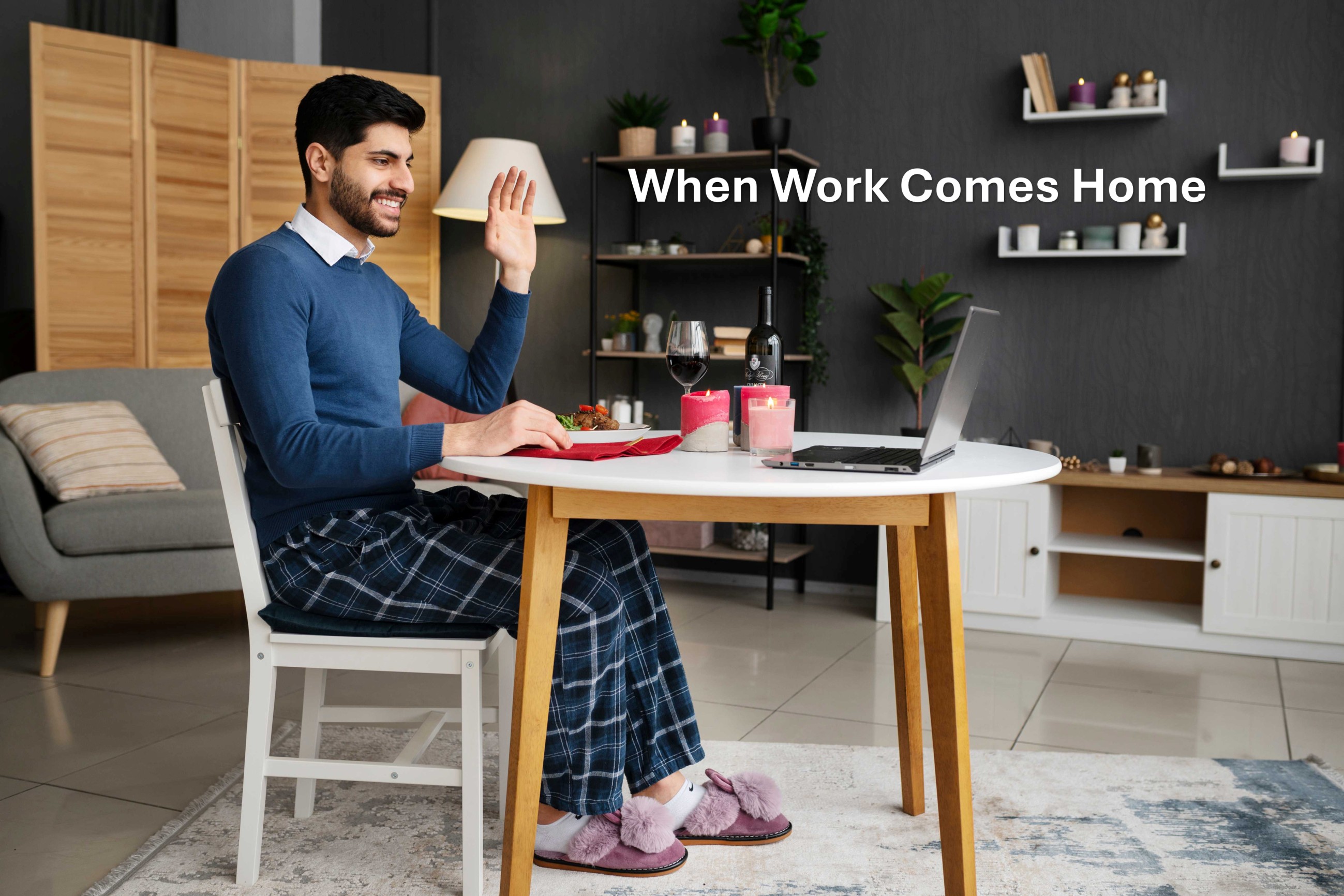
Remote Work: Thriving in the Digital Era
The Truth About Remote Work
You've chosen flexibility over commutes. Freedom over cubicles. But is it costing you your health, relationships, and sanity?
The honest answer: It doesn't have to.
Remote work isn't inherently harmful, but it is inherently challenging. Here's what you need to know and, more importantly, what you need to DO.
THE PROBLEMS YOU'RE FACING (And You're Not Alone)
1. Your Social Skills Are Silently Disappearing
The Reality:
• 25% of remote workers report declining social skills (52% for those under 24!)
• You're communicating with colleagues just 4.2 times per week
• 93% of communication happens through non-verbal cues, most lost in digital interaction
• Your professional network is shrinking without you realizing it
Why This Matters:
Soft skills aren't "nice to have", they're career essentials. When spontaneous interactions disappear, so does mentorship, collaboration quality, and advancement opportunities.
YOUR ACTION PLAN:
a) Join a professional community OUTSIDE your company (industry groups, forums, online associations)
b) Schedule 2-3 video calls weekly that prioritize conversation over task completion
c) Attend at least ONE industry event or conference every quarter
d) Practice active listening intentionally, summarize what others say before responding
2. Your Emotional Connections Are Weakening (And You Feel it)
The Reality:
• 67% of fully remote employees report increased loneliness
• Empathy, the foundation of relationships, requires physical presence and sensory information
• Conflict resolution takes 30% LONGER when emotional cues are invisible
• Trust building feels harder, relationships feel shallower
Why This Matters:
Without genuine emotional connection, work feels transactional. Life feels isolated. Your mental and physical health suffers as a result.
YOUR ACTION PLAN:
a) Start every meeting with a genuine "how are YOU doing?" and actually listen
b) Schedule monthly 1-on-1 video calls (not work-focused, relationship-focused)
c) Join interest-based communities with colleagues (book club, fitness challenges, hobby groups)
d) Practice vulnerability, share struggles, not just successes
e) Occasionally work from coffee shops or co-working spaces to be around humans
3. Your Mental Health Is on a Tightrope
The Reality:
• 40% experience anxiety/depression (vs. 35% in offices)
• 25% report DAILY loneliness
• 86% experience burnout
• 81% check emails OUTSIDE work hours
• 63% work on WEEKENDS
• Your bedroom, kitchen, and office have become the same room
Why This Matters:
Burnout isn't a productivity problem, it's a health crisis. It leads to depression, exhaustion, relationship breakdown, and physical illness. The flexibility that was supposed to help you is actually trapping you.
YOUR ACTION PLAN (The Non-Negotiable Ones):
a) SET WORK HOURS AND PROTECT THEM FIERCELY. Example- No emails after 6 PM. Period.
b) Create a dedicated workspace, even if it's just a specific desk or corner. Leave it when work ends.
c) Develop an "end of work day" ritual: walk, stretch, shower, change clothes, something that signals DONE
d) Turn off work notifications outside hours. OUT OF SIGHT = OUT OF MIND
Take your vacation days. ACTUALLY, take them. No "checking in"
e) Maintain friendships OUTSIDE work. Join clubs. Volunteer. Invest in non-work relationships
4. Your Body Is Suffering (Silently, But Measurably)
The Reality:
• 90.5% suffer lower back pain
• 85.7% experience upper back pain
• 39% sitting 9+ hours report cardiovascular symptoms (high BP, heart palpitations)
• 68% have new vision problems: eye strain, dry eyes, blurred vision
• If You're sitting 11-12 hours daily on average, your posture is probably terrible right now
Why This Matters:
These aren't minor discomforts, they're disease precursors. Back pain, eye problems, and cardiovascular strain compound over time. By age 45, your remote work years will have measurably aged your body.
YOUR ACTION PLAN (Start Today):
a) Ergonomic Setup:
- Chair: Lumbar support, feet flat on floor, knees 90 degrees
- Monitor: Eye level (top third of screen at eye height), arm's length away
- Keyboard/Mouse: Elbows at 90 degrees, no wrist strain
- Desk: High enough that arms are parallel to ground
b) The 20-8-2 Movement Rule:
- SIT for 20 minutes
- STAND for 8 minutes
- MOVE for 2 minutes (walk, stretch, light exercise)
- Set phone reminders. Non-negotiable.
c) The 20-20-20 Eye Rule:
- Every 20 minutes, look at something 20 feet away for 20 seconds
- Reduces eye strain by 90%
- Easy. Do it. Your future self will thank you.
d) Daily Movement Injections:
- Walk during audio-only calls
- Do 5-minute stretching videos between meetings
- Take stairs instead of elevators
- Stand during lunch, not sit more
- Exercise BEFORE work when possible (energizes your entire day)
e) Screen Wellness:
- Use blue-light glasses if working evenings
- Adjust brightness to match ambient lighting
- Increase font size (less squinting = less strain)
- Clean your screen regularly (dust causes eye irritation)
5. Your Work-Life Boundary Has Disappeared
The Reality:
• Work and home are geographically identical
• The psychological barrier that once separated them is gone
• You're "always on" mentally, even when physically resting
• Guilt surrounds both work and personal time
• Productivity anxiety drives longer hours with diminishing returns
Why This Matters:
Without boundaries, burnout is inevitable. Your brain never truly rests. Your relationships suffer because you're mentally "at work" during family time. Your creativity and problem-solving decline when you never stop working.
YOUR ACTION PLAN:
a) Time Blocking (Calendar is Sacred):
- Block 3-5 deep work periods weekly (no meetings, no interruptions)
- Schedule personal time like you schedule client calls
- Protect breaks like they're your most important meetings
- Calendar "transition time" between major tasks
b) Workspace Boundaries:
- Work ONLY in your designated space, avoid the bed completely
- Clean your workspace completely at day's end
- Don't let work materials overflow into personal areas
- If possible, close the door or use a room divider
c) Digital Boundaries:
- Remove work apps from your phone (or log out daily)
- Use separate browsers/accounts for work vs. personal
- Schedule emails to send during work hours (not instantly)
- Batch email checking: 3x daily, not constantly
d) Communication Boundaries:
- Tell teammates your work hours explicitly
- Set auto-responders outside hours
- Model healthy boundaries, when leaders do it, teams follow
THE TRUTH, NOBODY TELLS YOU
Remote work didn't create these problems. It only REVEALED them.
Your body always needed movement. You just got a desk job.
Your relationships always needed time. You just filled it with meetings.
Your mental health always needed boundaries. You just never had to enforce them.
Remote work is freedom, but freedom without structure is chaos.
The professionals thriving in remote environments aren't working harder. They're working smarter, with intention.
REMEMBER
Your remote work setup isn't permanent. You're building it.
Your health isn't a side effect of your job. It's the foundation.
Your relationships aren't luxuries you fit in. They're necessities you schedule first.
Your boundaries aren't selfish. They're sustainable.
This isn't about working less. It's about living more.
Final word from Liboo (the Liberated Owl):
At Liboo, we believe in one simple principle: Love Yourself First. Everything else follows.
Some of these recommendations/Suggestions or Action plans may not be practically feasible in your current situation, however understanding of these will help you adapt the good changes wherever possible and you can make a step forward towards your improved wellness.
Remote work is an incredible opportunity, to design your life, not just your schedule. To prioritize wellness, not sacrifice it. To build deep connections, not distant networks.
The remote revolution isn't about where you work. It's about how you live.
Start with one action today. Then another tomorrow. Compound them over time.
Your future self, healthier, more connected, more fulfilled, is waiting.
Share Your Story
Which of these challenges resonates most? What's ONE action you're committing to this week?
Drop a comment. Share this with someone who needs it. Let's build a community of remote workers who are thriving, not just surviving.
This article is designed to give you actionable, evidence-based strategies, not just theory. Save it, share it, and most importantly, ACT on it. Your health and happiness are waiting.

Vineet Bhardwaj
Founder & principal Coach - Liboo - Your Path to Growth & Wellness