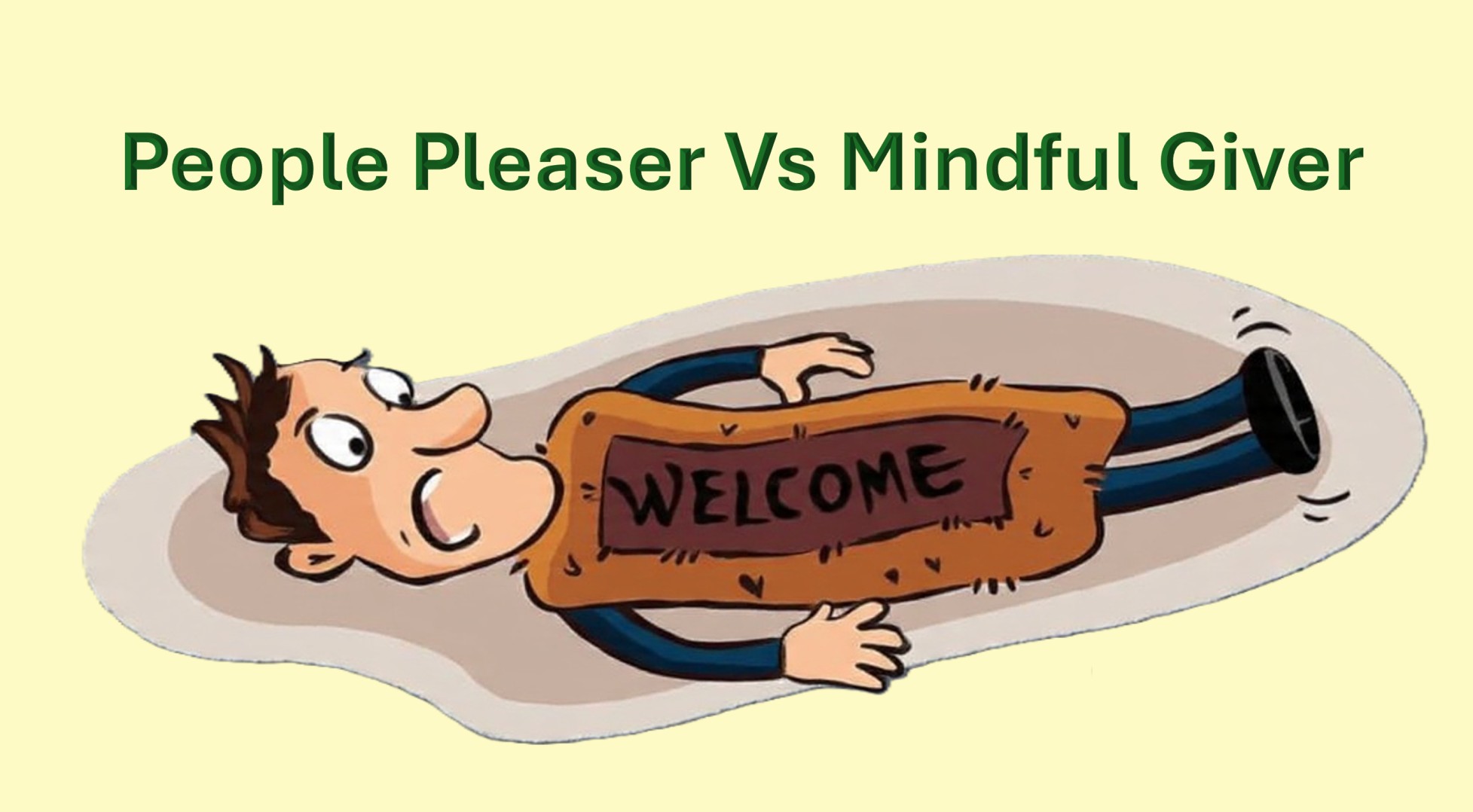
You've probably encountered both in your career. One says yes to everything and burns out quietly. The other gives generously and yet thrives. The difference? One sacrifices their identity; the other strengthens it.
If you have read my recent article on Adam Grant's research, "The Leader's Guide to Giving: Insights from Adam Grant's Ground-breaking Research", you know that givers, when strategic and boundaried, are among the most successful people. But here's the paradox: not all giving is created equal. There's a vast difference between being a people pleaser and being an otherish giver with healthy boundaries. Confusing the two will sabotage your growth.
Let me clarify.
The People Pleaser: Definition and Cost
A people pleaser operates from a place of fear disguised as generosity. The underlying belief is: "If I give enough, do enough, and please enough, people will like me, accept me, and won't leave me." This sounds noble, but it's actually a survival mechanism rooted in conditional self-worth.
The psychological profile: People pleasers say yes before thinking. They apologize excessively. They struggle to express their true thoughts, constantly editing themselves to match others' expectations. They feel responsible for others' emotions. And crucially, they cannot say no without guilt, shame, or elaborate justification.
The cost is silent but destructive. Research shows people pleasers experience chronic stress, anxiety, and emotional exhaustion. They become resentful, not because they're generous, but because they're sacrificing their own needs and getting nothing in return. Their relationships are built on false versions of themselves, preventing genuine intimacy. And in their careers, they become the person everyone exploits, known for availability, not excellence.
The Mindful giver: Definition and Strength
A Mindful giver, what Grant calls an "otherish giver”: operates from abundance and clarity. The underlying belief is: "I have something valuable to offer, and I choose to give it when it aligns with my values and capacity."
The psychological profile: Mindful givers are intentional. They give because they genuinely want to help, not because they fear rejection. They say yes to opportunities that matter and no to everything else, guilt-free. They understand their boundaries and communicate them clearly. They expect nothing in return, but they don't tolerate exploitation either.
The results are powerful. Mindful givers build authentic relationships based on truth. They develop strong networks because people respect their integrity and recognize their genuine investment. They succeed professionally because their giving enhances their reputation without diminishing their capacity. And they experience fulfillment rather than resentment, because their giving is sustainable.
The critical difference: Mindful givers protect their well-being. People pleasers sacrifice it.
Liboo Recommends Five Ways to Shift from People Pleaser to Mindful giver
1. Audit Your "Yes" Pattern
Immediate action: For the next three days, notice every time you say yes. Write them down. Next to each, note: Did I say yes because (a) it genuinely aligned with my values, (b) I wanted to help, or (c) I was afraid of disappointing someone?
If most of your yeses fall into category (c), you're people pleasing. This awareness is your first step to change.
2. Define Your Giving Strategy
Immediate action: Write down three areas where you genuinely want to give: mentoring, advice, time, expertise. Be specific. Now write down three areas where you don't want to give: either because it drains you or it's not your strength. This clarity is what separates people pleasers from Mindful givers.
Share this with your close colleagues or team: "I'm most helpful when I can give [X, Y, Z]. I'm less effective with [A, B, C]." This isn't selfish; it's honest and professional.
3. Practice the Boundary Principle: Give, Then Draw the Line
Immediate action: This week, give something genuinely: your time, expertise, or help. Then stop. Don't over-give. Don't check back obsessively. Don't make it conditional on their response.
Notice the difference: Mindful givers give once and trust. People pleasers give endlessly and resent.
4. Replace "No, Because..." with "No, Because..."
Immediate action: When you decline a request, don't over-explain or apologize. Instead, give a brief, honest reason tied to your priorities:
- ❌ "I'm sorry, I can't. I'm so busy with other projects..."
- ✅ "No, I'm focused on [priority] right now."
People pleasers soften their boundaries with elaborate excuses. Mindful givers state them clearly and kindly.
5. Give Yourself the Same Energy You Give Others
Immediate action: If a colleague asked you for help with something important, you'd immediately step up. This week, step up for yourself the same way. Protect your time. Invest in your development. Say no to distractions.
Mindful givers understand that giving to themselves isn't selfish, it's the prerequisite for sustainable giving to others.
The Coaching Truth
Here's what I've seen after years of coaching: people pleasers don't fail because they're too generous. They fail because they're not generous with themselves. They hoard their own growth, boundaries, and well-being.
The most successful leaders I know aren't those who say yes to everything. They're those who say yes to what matters and no to what doesn't, with kindness and clarity.
They give from a full cup, not an empty one. They build relationships based on truth, not transaction.
This week, ask yourself honestly: Am I a people pleaser or a Mindful giver? The answer determines whether your generosity becomes your strength or your ceiling.
The difference isn't about giving less. It's about giving smartly.

Vineet Bhardwaj
Executive Coach & Founder - Liboo - Guide to your Growth & Wellness Journey